

What Is Asbestos?
Asbestos is a naturally occurring group of minerals. These minerals are made up of tiny, strong fibers. Because these fibers are resistant to heat and electricity, and they don’t break down easily, asbestos was a popular building material for many years. It was used in a wide variety of products, from insulation and roofing to floor tiles and even some paints. The widespread use of asbestos in construction largely occurred before the 1980s. While its properties made it useful, we now know that inhaling asbestos fibers can lead to serious health problems over time.
Where Asbestos Is Commonly Found
In homes, asbestos-containing materials can be found in several places. These materials were often used for their insulating and fire-resistant qualities. Some common locations include:
-
Insulation: Around pipes, boilers, and in attic spaces.
-
Building materials: Asbestos cement sheeting (often called ‘fibro’) used for walls, ceilings, eaves, and fences.
-
Flooring: Vinyl and linoleum sheet flooring, and the adhesive used to install them.
-
Textured paints and coatings: Some older decorative paints and ceiling textures.
-
Roofing and siding: Corrugated roofing sheets and some types of siding.
It’s important to remember that asbestos fibers are often not visible to the naked eye, making identification tricky. If your home was built before the mid-1980s, there’s a higher chance these materials are present. For accurate identification, professional testing is recommended Identifying asbestos in your home can be challenging.
Identifying Asbestos-Containing Materials
Spotting asbestos can be difficult because it’s often mixed into other materials. The age of your home is a significant clue; houses built before the 1980s are more likely to contain asbestos. Look for materials like asbestos cement sheeting, older vinyl floor tiles, and insulation around heating systems. If a material looks like it might contain asbestos, it’s best to assume it does until proven otherwise.
-
Check the age of your home: Homes built before the mid-1980s have a higher probability of containing asbestos. Even homes built between the mid-1980s and 1990 might still have asbestos-containing products.
-
Examine suspect materials: Look for materials that are brittle, crumbling, or appear damaged. These are more likely to release fibers.
-
Consider professional testing: The most reliable way to identify asbestos is through laboratory testing. A professional can take a sample safely and analyze it. Remember, asbestos fibers are incredibly fine and can be released during the processing of asbestos These strong fibres are fire-resistant.
Assessing Risk And Planning For Asbestos Abatement
Before any renovation work begins, it’s important to figure out if asbestos is even present and what that means for your project. Not all asbestos is a problem, but knowing where it might be and how to handle it safely is key. This stage is all about being prepared and making smart choices to protect yourself and others.
When Asbestos Poses A Risk
Asbestos-containing materials (ACMs) generally don’t pose a health risk if they are in good condition and left undisturbed. The danger arises when these materials become damaged, deteriorating, or are disturbed during renovation activities. Activities like cutting, drilling, sanding, or breaking ACMs can release microscopic asbestos fibers into the air. These fibers, when inhaled, can lead to serious long-term health issues. The condition of the material is a primary factor in determining the level of risk.
Professional Inspection And Testing
To accurately assess the presence and condition of asbestos, a professional inspection and testing is highly recommended. Trained inspectors can identify potential ACMs and collect samples for laboratory analysis. This testing provides definitive confirmation of asbestos presence and its type. Based on the findings, professionals can advise on the best course of action, whether it’s leaving the material alone, encapsulating it, or proceeding with removal. This step is vital for understanding the scope of work and potential hazards involved in your home renovation.
Understanding Council Requirements And Permits
Different local councils have specific regulations regarding asbestos removal. It is important to check with your local council about permit requirements before starting any work. Some councils may require a permit even for small amounts of asbestos removal, while others have specific thresholds. Understanding these federal requirements and local ordinances will help you avoid fines and ensure the work is done legally and safely. This planning stage also includes understanding if an asbestos removal certificate is needed, which depends on the quantity and type of asbestos being handled.
Safe Practices For Asbestos Abatement During Renovation
When undertaking renovations, it’s vital to approach any potential asbestos-containing materials with extreme caution. Certain activities are strictly prohibited to prevent the release of hazardous fibers. This includes the use of power tools like angle grinders, circular saws, and electric sanders, as well as high-pressure water blasters and compressed air. These methods can aerosolize asbestos particles, posing a significant health risk. Instead, always thoroughly wet down suspect materials before and during any work, using a light spray of water. This helps to keep dust down and minimize fiber release. If you’re working on a roof, avoid walking on it if possible, and never drop sheeting or slide one sheet over another, as this can create dust. Minimizing cutting and breaking up materials is always the best approach.
Preparing The Work Area
Proper preparation of the work area is non-negotiable. Before you begin, ensure the area is well-ventilated, ideally outdoors, but never on a windy day. If working indoors, close all windows and doors and cover air vents to prevent fiber spread. Lay down heavy-duty plastic sheeting to cover the ground, vegetation, play equipment, vehicles, and personal belongings if working outside. Indoors, cover the floor with plastic sheeting. It’s also important to keep family members and pets away from the designated work zone. This containment is key to preventing contamination of other living spaces. For homeowners planning projects, understanding council requirements and permits is an early step in safe renovation.
Minimizing Dust And Fibre Release
Controlling dust and fiber release is the primary goal during asbestos abatement. Always keep materials wet while working. Avoid dry sweeping; instead, use damp cloths or paper towels for cleanup, double-bagging them immediately. Never use a regular vacuum cleaner, as it cannot filter asbestos fibers effectively and will likely spread them further. If a material is cracked, seal it with a product like PVA glue or paint. For more significant damage, removal might be necessary, but this should be done with the utmost care and appropriate safety gear. Remember, if you’re unsure about any aspect of handling asbestos, it’s always best to consult with professionals or seek guidance from resources like WorkSafe Victoria. Homeowners should be aware that disturbing suspect materials like ceiling tiles or insulation without proper precautions can lead to fiber release before renovating.
Essential Personal Protective Equipment
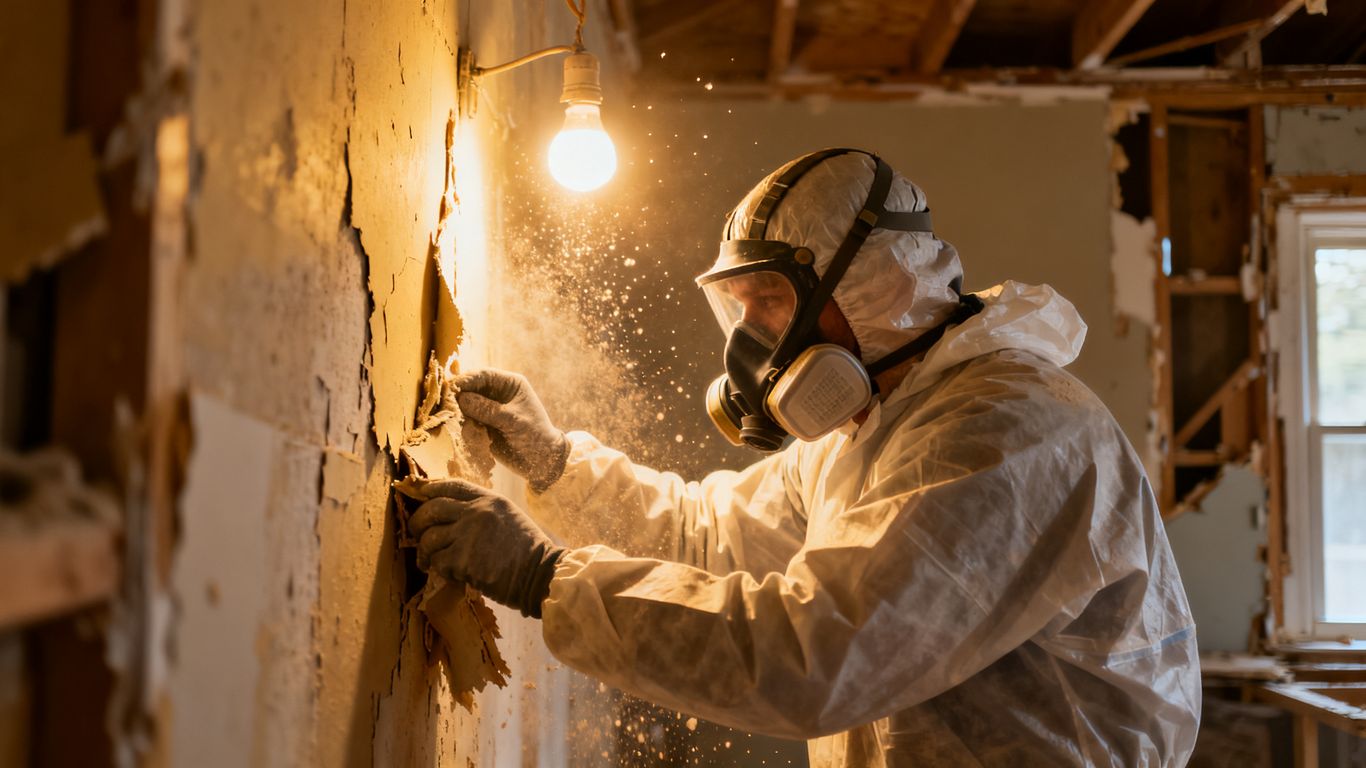
When undertaking any work that might disturb asbestos-containing materials, wearing the correct personal protective equipment (PPE) is not just recommended; it’s a critical step to safeguard your health. This equipment acts as a barrier, preventing asbestos fibers from entering your body. Without the proper gear, you significantly increase your risk of exposure.
Respiratory Protection
The most vital piece of PPE is a respirator designed to filter out fine particles. A NIOSH-approved P100 respirator is generally required. It’s important to ensure the respirator fits snugly against your face, creating a seal to prevent fibers from bypassing the filter. A proper fit is paramount for effective protection. You can find more information on selecting the right respirator from safety equipment suppliers.
Protective Clothing and Gloves
Beyond respiratory protection, disposable coveralls with a hood are necessary to cover your entire body. These prevent fibers from settling on your regular clothing, which could then be carried elsewhere. Similarly, disposable gloves and boot covers should be worn. These items are designed to be discarded after use, preventing cross-contamination. Never reuse disposable clothing or attempt to clean it.
Post-Work Decontamination Procedures
Once the work is completed, a specific decontamination process must be followed. This involves carefully removing the PPE without spreading fibers. The disposable items should be sealed in designated asbestos waste bags. After removing all protective gear, it is advisable to shower thoroughly and wash your hair to remove any residual fibers. This careful approach helps protect not only yourself but also other members of your household. Proper PPE is crucial for anyone involved in maintenance or custodial tasks where asbestos might be present, making it a key part of safe work practices.
Managing Asbestos Waste
Properly managing asbestos waste is a critical step in any renovation project involving these materials. It’s not just about tidiness; it’s about preventing the release of harmful fibers into the environment and protecting everyone’s health.
Proper Packaging and Labeling
Once asbestos-containing materials have been removed, they must be handled with care to avoid creating dust. The general rule is to keep the material wet until it can be packaged. This significantly reduces the chance of fibers becoming airborne.
-
Double-bagging is often required. Use heavy-duty plastic bags specifically designed for asbestos waste. Ensure the bags are sealed tightly.
-
Labeling is mandatory. Bags must be clearly marked with the word “ASBESTOS” in bold letters. This alerts waste handlers and the public to the hazardous nature of the contents.
-
Secure the packaging. Make sure the bags are leak-tight and can be handled without tearing. Avoid storing asbestos waste for extended periods; dispose of it as soon as possible.
Approved Disposal Methods
Disposing of asbestos waste is regulated to prevent environmental contamination. Not all landfills are equipped to handle this type of material.
-
Check local regulations. Your local council or environmental protection agency will have specific guidelines on where asbestos waste can be taken.
-
Use designated landfills. Only dispose of asbestos waste at sites that are licensed to accept it. These facilities have special procedures for handling and burying asbestos safely. You can often find information on approved sites through your local council or environmental authorities. Check local regulations for specific disposal locations.
-
Transport safely. Ensure that the packaged waste is secured in your vehicle to prevent movement or damage during transit.
Using Licensed Waste Removal Services
For many homeowners, the safest and most convenient option is to hire a licensed asbestos waste removal service. These professionals are trained in the safe handling, packaging, transport, and disposal of asbestos materials. They have the necessary equipment and knowledge to comply with all regulations, providing peace of mind and ensuring the job is done correctly. This is particularly advisable for larger quantities of asbestos or when dealing with loosely-bound materials, which require specialized handling.
When To Call Licensed Professionals
While some minor asbestos-containing materials might be manageable for a homeowner under specific, controlled circumstances, there are definite situations where bringing in licensed professionals is not just recommended, it’s imperative. Attempting to handle certain types of asbestos removal without the proper training and equipment can put yourself, your family, and your neighbors at significant risk.
Understanding Removal Certificate Requirements
In many regions, regulations dictate when a professional asbestos removal certificate is necessary. For instance, removing more than 10 square meters of bonded asbestos material typically requires a business holding an ‘A’ or ‘B’ Class asbestos removal certificate. Homeowners generally cannot obtain an ‘A’ Class certificate, which is reserved for more hazardous types of asbestos. It’s always best to check with your local council about specific permit and certification requirements before any work begins. This step helps avoid legal issues and ensures compliance with public health laws.
Handling Loosely-Bound Asbestos
Loosely-bound asbestos, often found in materials like sprayed insulation or lagging, presents a much higher risk due to its friability. These materials can easily release fibers into the air when disturbed. The removal of loosely-bound asbestos must always be undertaken by a business with an ‘A’ Class asbestos removal certification. Attempting to remove this type of material yourself is strongly discouraged and can lead to widespread contamination. For an unbiased evaluation of your home’s asbestos situation, consider hiring an independent professional for an assessment before any work begins.
Protecting Family and Neighbors
Regardless of the quantity or type of asbestos being handled, there’s a responsibility to protect those around you. Public health laws require that you prevent the release of asbestos fibers into the air. This means taking extensive precautions, such as sealing off work areas, wetting materials during removal, and proper waste containment. If you are unsure about the best practices or the extent of the asbestos in your home, it is wise to consult with professionals. They can provide guidance and perform the work safely, minimizing exposure risks for everyone. Hiring a professional also helps guarantee an unbiased evaluation of your home’s asbestos situation, especially if they are not involved in the actual removal work as recommended by experts.